Water & Food
How Much Water Should Your Household Store? A Practical Plan
Start with the one-gallon rule, then make it fit your home: who needs extra, which containers work, how often to refresh, and how to make questionable water safer.
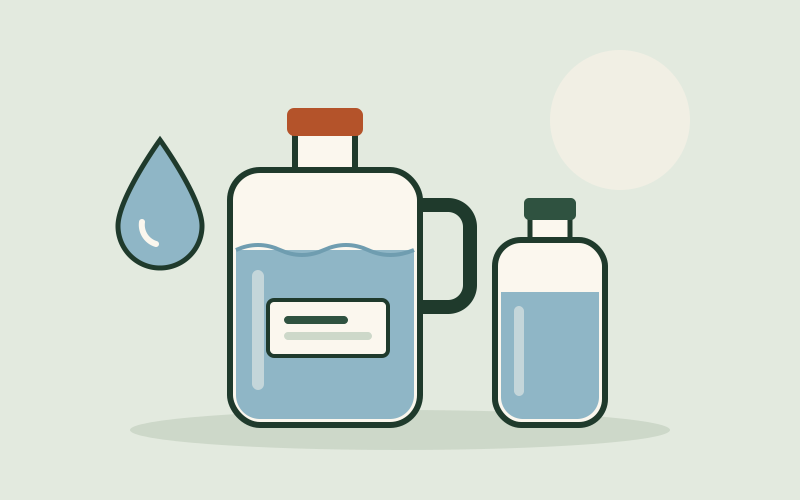
Water is the first item on nearly every preparedness list, and for good reason. A household can do without plenty of comforts for a few days, but not without safe water for drinking, cooking and basic hygiene. The encouraging part is that water storage is one of the easiest preparedness projects to complete. It takes some space, a few suitable containers and a reminder on the calendar. No special skills required.
This guide covers how much to store, where to keep it, how to keep it fresh and what to do if your stored supply starts to run low.
Start with the one-gallon rule
FEMA's Ready.gov recommends storing at least one gallon of water per person per day. That gallon is meant to cover drinking water plus a modest amount for food preparation and hygiene. Think of it as a floor rather than a ceiling.
Ready.gov also suggests keeping at least a three-day supply for an evacuation kit and, if you have room, a two-week supply at home. To find your household's number, multiply people by days:
- A two-person household storing for three days needs 6 gallons.
- The same household storing for two weeks needs 28 gallons.
- A family of four storing for two weeks needs 56 gallons.
Those totals can look large on paper, but they build up gradually. Many households reach the three-day target first, then work toward two weeks over a few months of ordinary shopping trips.
Plan for the people who need more
The one-gallon figure assumes a typical adult in mild weather. Several situations call for more:
- Hot weather. People drink more in the heat, and needs can rise quickly during a summer outage.
- Children, nursing mothers and people who are ill. Ready.gov notes that these groups may need more water than the baseline.
- Medical needs. Some health conditions and some home medical equipment require additional clean water. If that applies in your home, ask your health care provider what to plan for.
- Pets. Dogs and cats need water too. Add their share instead of assuming they can draw from the household supply.
A simple approach is to calculate your base number, then add a cushion of roughly a quarter more if any of these apply. Rotating a little extra is far easier than coming up short.
Choose containers that hold up
The simplest option is commercially bottled water, kept sealed in its original packaging and stored according to the date on the label. Larger sealed jugs and multi-gallon containers designed for drinking water also work well and make good use of space.
If you would rather fill your own containers from the tap, use food-grade containers made for drinking water. Ready.gov advises against reusing milk or fruit juice jugs, because milk proteins and fruit sugars are hard to clean out completely and those thin plastics break down over time. Never use a container that once held chemicals.
Before filling your own containers, wash them with dish soap and water, rinse well, then sanitize them. Ready.gov publishes step-by-step instructions that use a diluted solution of unscented household bleach followed by a thorough rinse. Fill with tap water from a treated public supply, cap tightly without touching the inside of the cap, and label each container with the date.
Store it where it stays cool, dark and reachable
Heat and light work against stored water quality, and so does clutter. A good storage spot is:
- Cool and out of direct sunlight, such as a closet floor, the space under a bed or a basement shelf.
- Away from gasoline, pesticides, paint and cleaning products, since plastic can pick up odors.
- Easy to reach. If your supply sits behind three boxes of holiday decorations, you are much less likely to rotate it.
Spreading water across two or three spots can help if one part of the house becomes hard to reach after a storm. A few bottles in the car are also worth keeping, especially during the hottest and coldest months.
Keep it fresh with a rotation schedule
Ready.gov recommends replacing water you have stored yourself every six months. Commercially bottled water can be kept until the date printed on it, though many households rotate everything on the same schedule to keep things simple.
Pick two dates a year and stick with them. Plenty of families pair water rotation with the spring and fall clock changes or with testing their smoke alarms. On rotation day:
- Use the older water for houseplants, cleaning or cooking.
- Wash and sanitize any containers you plan to reuse.
- Refill, recap and relabel with the new date.
- Replace any bottles that were used during the year.
Know where else to find water at home
If your stored supply runs low, your home probably holds more usable water than you expect. Common sources include the water already in your water heater tank, melted ice cubes, and the liquid packed in canned fruits and vegetables.
If you plan to draw from a water heater, turn off its power or gas supply first and let the water cool before opening the drain valve near the bottom of the tank. Learn where that valve is now, while everything is calm.
Water from a toilet tank (not the bowl) can be used for flushing or cleaning, but should not be used for drinking, particularly if the tank has cleaning tablets in it. Water from pools, hot tubs, radiators and waterbeds is not suitable for drinking.
Make questionable water safer
If your community issues a boil-water advisory, or you need to use water you are unsure about, follow instructions from your local water utility or health department first. As general guidance, the CDC advises bringing clear water to a rolling boil for one minute, or three minutes at elevations above 6,500 feet, and letting it cool before use.
If boiling is not possible, unscented household bleach can be used to disinfect water. The correct amount depends on the concentration of the bleach, so follow the EPA's published emergency disinfection guidance instead of estimating. Cloudy water should be left to settle, then filtered through a clean cloth or coffee filter before it is treated.
Make it a household project
Water storage goes faster when everyone pitches in. Children can help label containers and write the next rotation date on the calendar, and older children can learn where the water heater valve is. When everyone knows where the water lives and why it is there, the supply is far more useful on the day it is needed.
This article offers general preparedness information and is not professional advice. Always follow the instructions of local officials during an emergency. Spotted an error? Email support@preparedamerican.net. Read our editorial standards.